O-Ringen 2026 — Orienteering & Work: A Week to Remember
July 18–25, 2026 was a special week for me. O-Ringen came to Gothenburg, and orienteering, research, teaching and work all came together in a way that would have been a dream when I moved to Sweden four years ago.
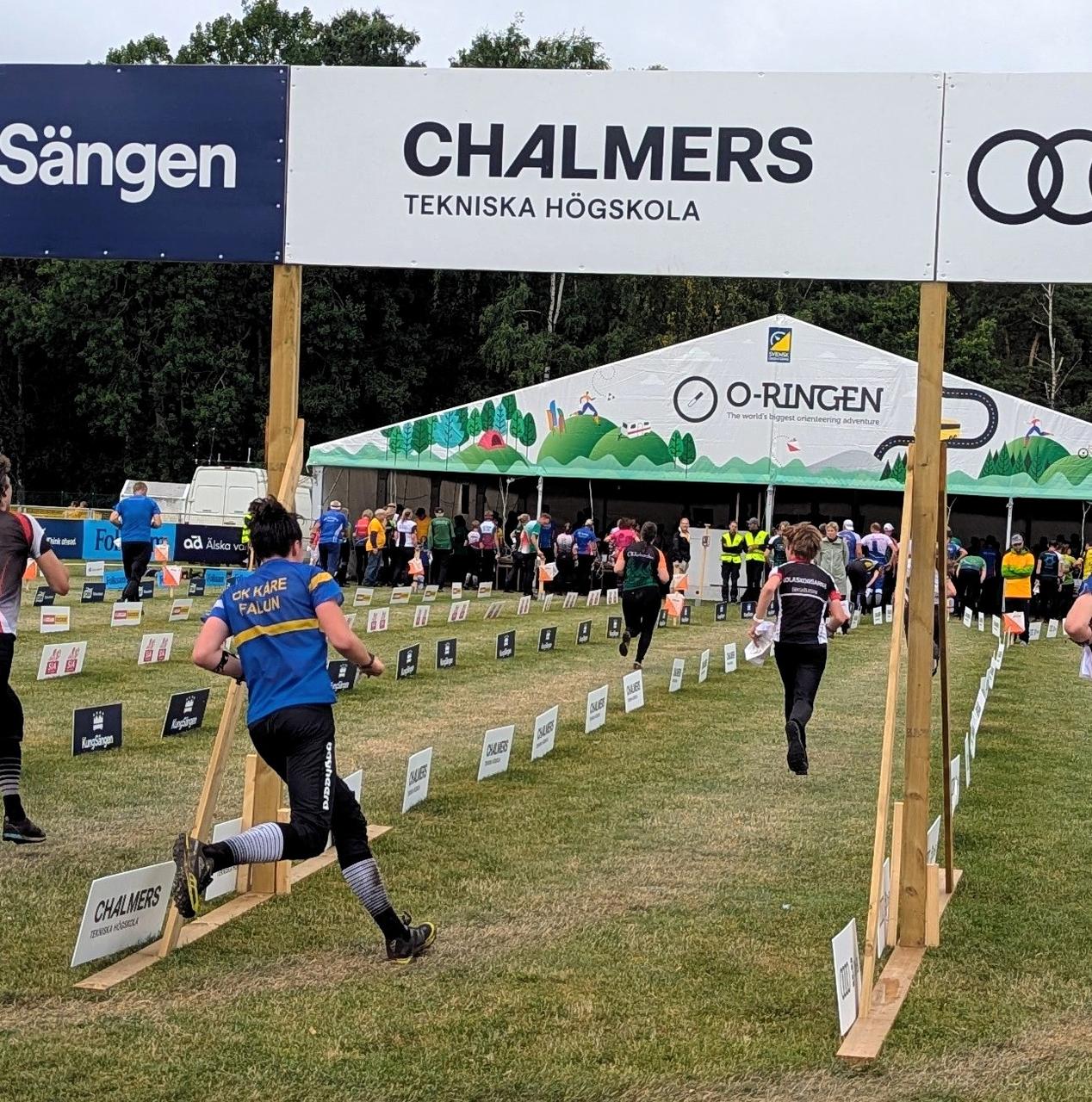
First mindblowing fact: Chalmers was the main sponsor of O-Ringen 2026.
Seeing my institution's name and logo everywhere at the world's largest orienteering event — while at the same time being there as an orienteer, a researcher and a teacher — felt quite remarkable.
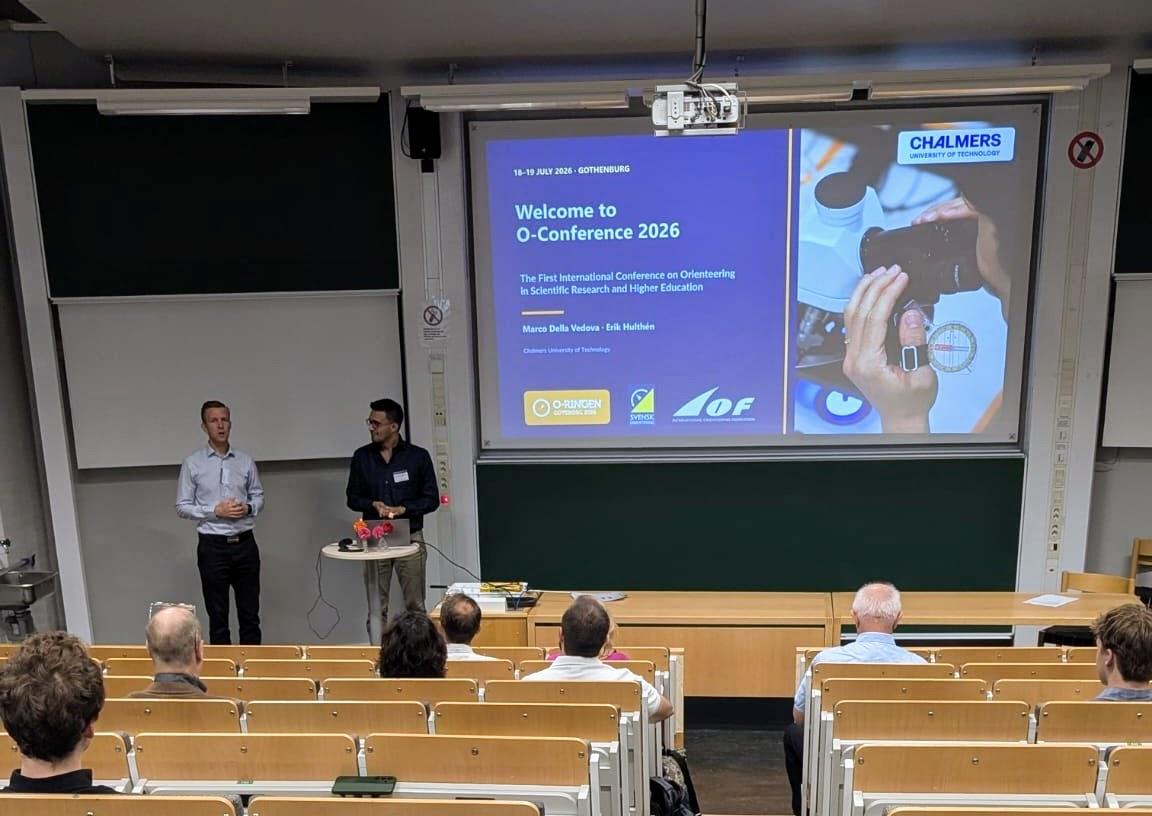
It was also the week of my big bet for 2026: organizing O-Conference — The First International Conference on Orienteering in Scientific Research and Higher Education.
Orienteering-inspired research and teaching
I like to use the term “orienteering-inspired” research and teaching.
By that, I don't mean only research about orienteering. I mean using orienteering as a source of interesting problems, data, experiments and ideas that can tell us something more general.
Orienteering is an extraordinarily rich environment for research. It combines physical activity with perception, spatial reasoning, navigation, decision-making under uncertainty, route planning, map understanding and human interaction with complex environments. These are interesting problems in sports science, of course, but also in artificial intelligence, computer vision, cognitive science, psychology, geography and many other fields.
The same applies to teaching. Orienteering provides real and intuitive problems that students can understand and work with, even when the underlying technical questions are complex.
Over the past few years, I have increasingly tried to connect these worlds in my own work. O-Ringen 2026 gave me an unusual opportunity to bring many of those pieces together.
O-Conference: my big bet for 2026
The idea behind O-Conference was somewhat unusual: bring together researchers who work with orienteering, or use orienteering in their research and teaching, despite coming from very different academic disciplines.
I knew these people existed. What I didn't know was whether putting them all in the same room would actually work.
It did.
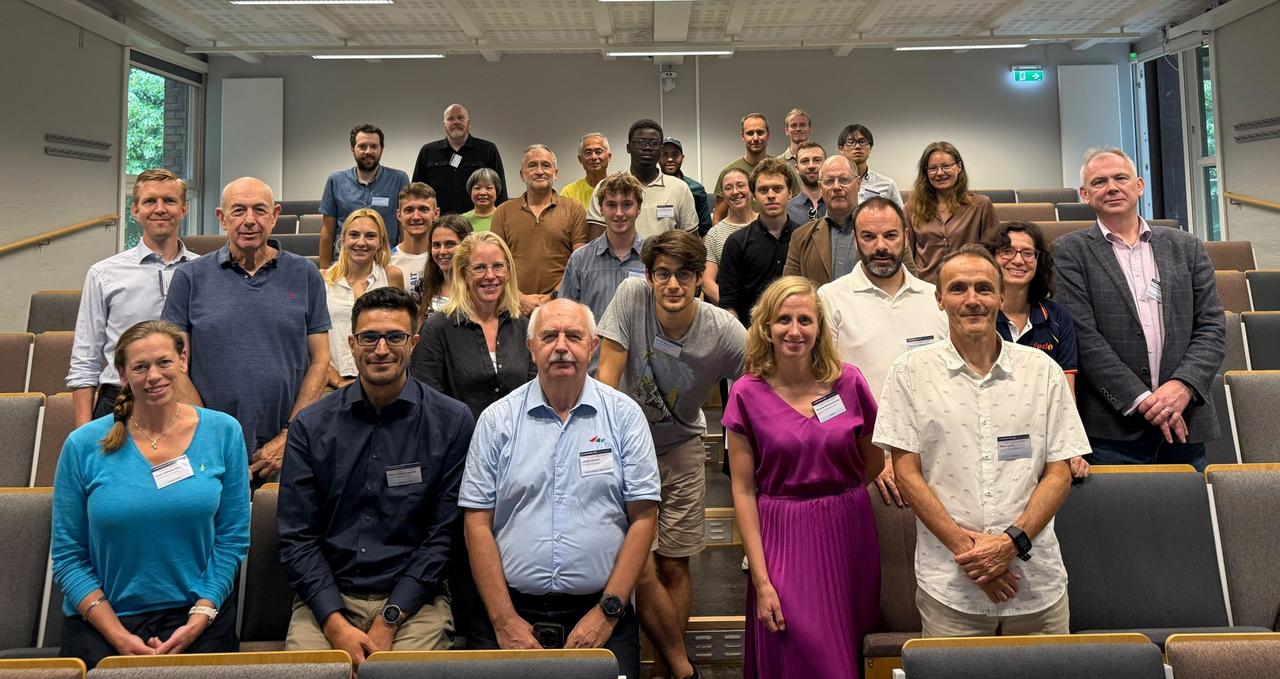
The conference took place at Chalmers on 18–19 July 2026, just before the O-Ringen competitions started. Over two days, more than 50 participants came together for 25 academic talks exploring orienteering from a remarkable variety of perspectives.
My biggest takeaway from the conference was how effectively orienteering became the common ground that allowed researchers from widely different disciplines to understand each other.
The talks approached the sport from very different perspectives, but everyone in the room already understood the fundamental challenges of orienteering: navigating through an unfamiliar environment, reading and interpreting a map, making decisions under time pressure, choosing routes, dealing with uncertainty, and combining physical and cognitive performance.
That shared understanding made interdisciplinary discussions surprisingly natural.
There was also a remarkable amount of diversity in the room — in academic seniority, gender, nationality and, especially, academic discipline. Students and early-career researchers were discussing their work alongside senior academics, often looking at similar problems through completely different lenses.
Orienteering was the common language in the room.
Perhaps this connection between orienteering and academia should not be so surprising. Orienteering is an unusually cognitive sport: you need to think continuously while performing physically. Perception, spatial reasoning, memory, decision-making and problem-solving are all part of the competition.
And it is interesting how many top orienteers also have a Master, if not a PhD, degree. I suspect that is not entirely a coincidence. :-)
Making people happy with Följa John
The conference was just the beginning of the week.
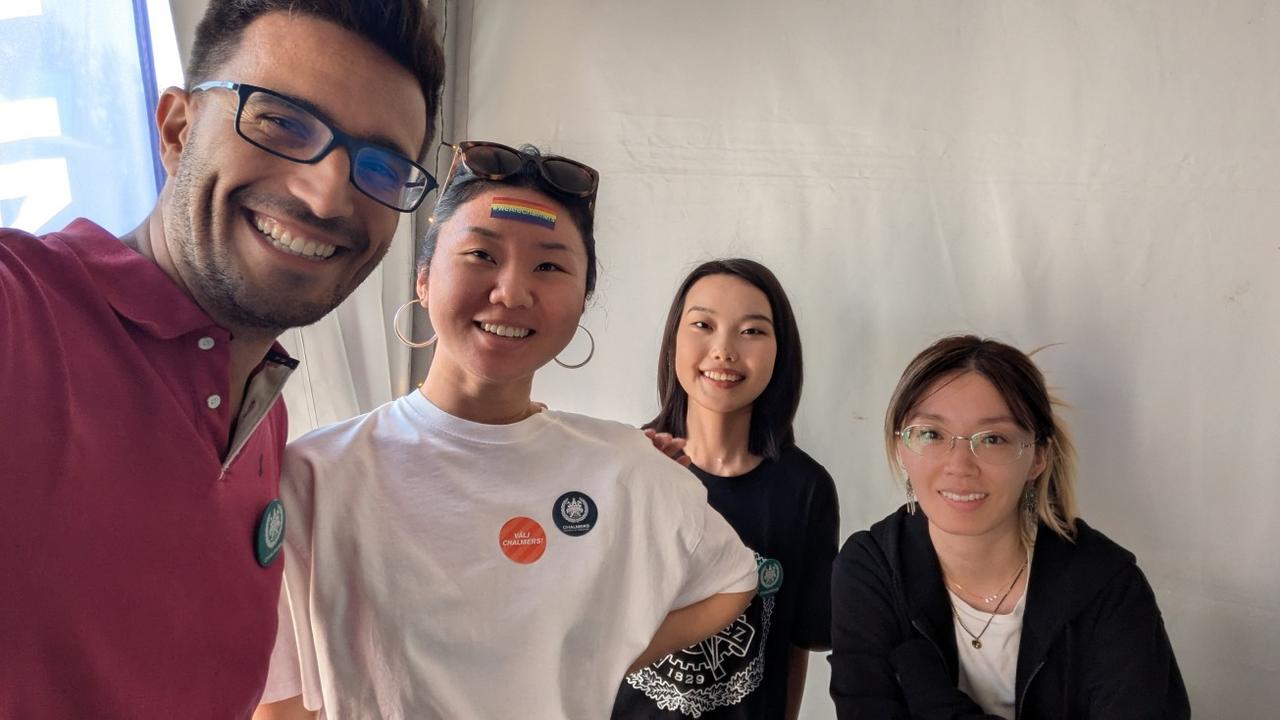
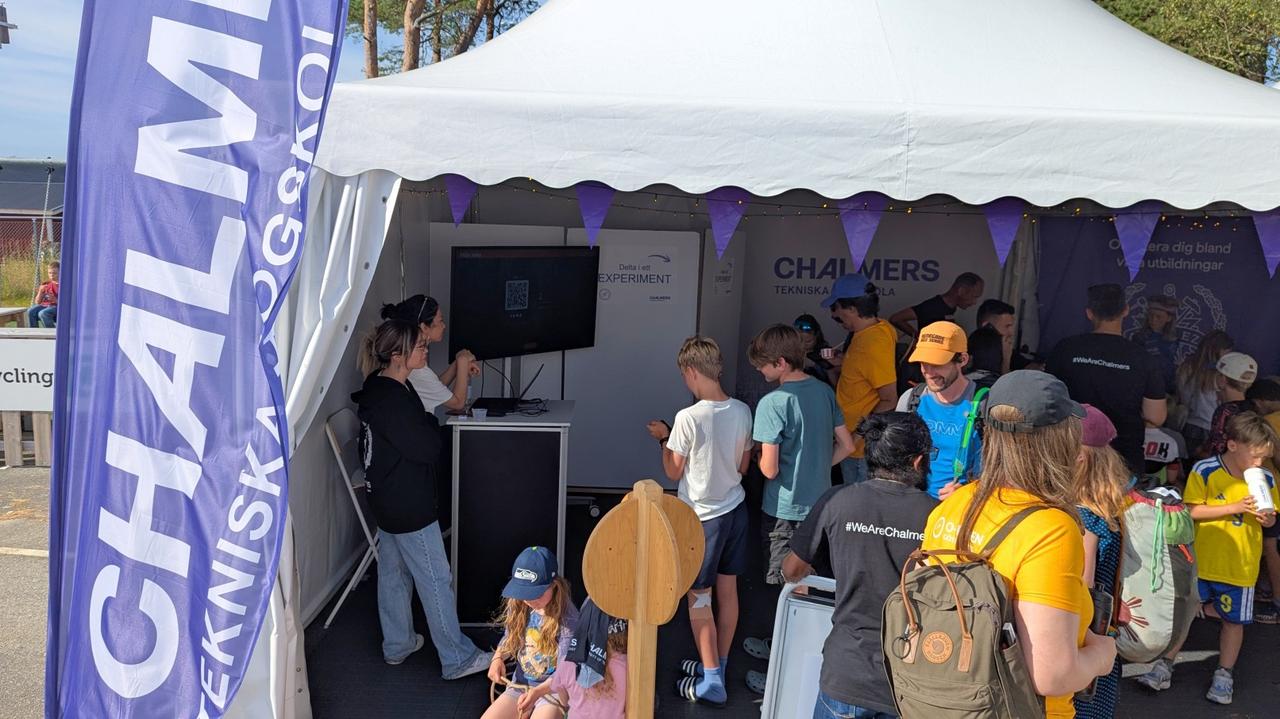
At the Chalmers tent at Oringen-city in Stora Holm, we had the opportunity to meet orienteers directly and show some of what we do. One of the things I enjoyed most was seeing people play our little orienteering game, Följa John, and how quickly they became engaged and happy with it.
The task is straightforward. You watch a first-person video of someone running through the forest. At the end, you have to determine where you are on an orienteering map. Straightforward to explain, at least. Not necessarily straightforward to solve!
It was great to see people immediately engage with the challenge, discuss what they had seen, compare their answers and test their localization skills.
And now Följa John is available online for everyone to play, so the game did not end when we packed up the tent after O-Ringen.
From a student project to a scientific experiment
What I particularly like about Följa John is the story behind it.
Följa John started as a student project in the TRA300 Digitalization in Sports course at Chalmers, in 2024 and 2025. As part of the course, we collected first-person orienteering videos together with the corresponding maps and GPX tracks. This data now forms the OVMX dataset, and was also used to develop the game.
But the same data can be used for much more than a game.
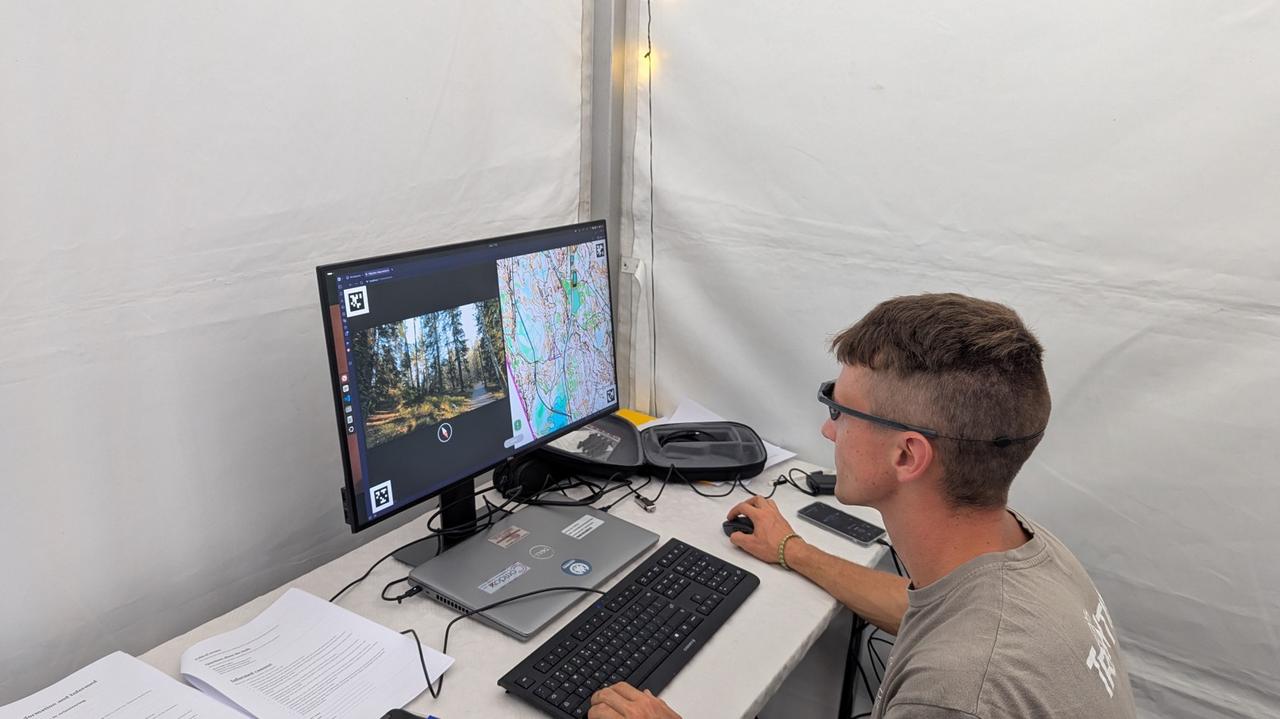
During O-Ringen, we also conducted a scientific experiment using eye-tracking to investigate how orienteers solve exactly this localization problem. By recording where participants look while watching the videos and interacting with the map, we can study what visual information they use and how they reason about their position.
So the same underlying idea and data have connected education, research and outreach: a student project, an research dataset, a game for the orienteering community, and a scientific experiment about human spatial intelligence.
For me, this is a perfect example of what I mean by orienteering-inspired research and teaching. We start from something that is genuinely interesting in orienteering and use it to formulate research questions, create teaching activities, build datasets and develop something that anyone can play with.
A very Swedish confirmation
There was also a more personal dimension to the week.
I moved to Sweden four years ago to start working at Chalmers. At the time, of course, I couldn't know exactly where that decision would lead.
Four years later, Chalmers was the main sponsor of O-Ringen in Gothenburg. I was there representing the university, organizing an academic conference about orienteering, presenting our research to orienteers, running an experiment during the event, and playing a game with visitors that originated from one of our courses.
At the same time, I was simply there enjoying O-Ringen and the sport that connects all these things.
It is difficult to imagine a better intersection of my professional and personal interests.
In that sense, the whole week felt like a confirmation that moving to Sweden four years ago was the right thing to do.
What's next?
O-Conference was an experiment. We didn't know how large the community would be, how interdisciplinary it would really be, or whether people would find enough common ground to make the event worthwhile.
The answer to all three questions was encouraging.
There were lively discussions during the sessions, during the breaks and after the conference. People discovered others working on related questions from completely different perspectives. Most importantly, there was a clear feeling that this should not be the last time we meet.
So yes: I would like O-Conference to become a recurring event.
My big bet for 2026 paid off.
And O-Ringen 2026 became a week I will remember for a very long time.